
Androgenetic alopecia
Understand the condition and discover advanced solutions
Introduction
What is androgenetic baldness?
How is it diagnosed?
Recommended treatments
Why start treatment early?

Androgenetic baldness, also known as typical male baldness, is one of the most common forms of hair loss.
It primarily affects men but is increasingly common among women as well. Although it is not life-threatening, its impact on self-image and confidence can be significant.
Today, there are innovative and personalized treatments to address hair loss, stimulate follicle regeneration, and restore hair.
Androgenetic Baldness – Definition, Causes, Symptoms, and Diagnosis
What is androgenetic baldness?
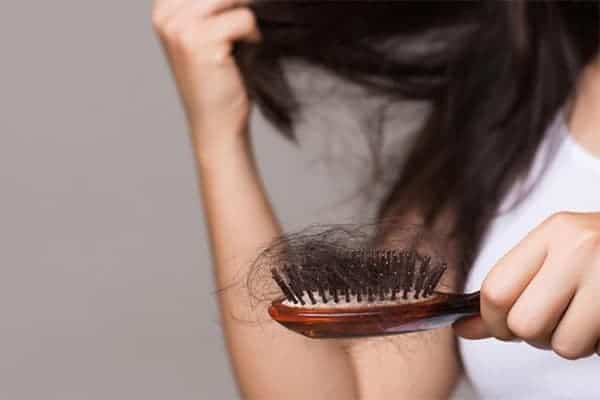
Androgenetic baldness (Androgenetic Alopecia) is the most common form of hair loss. It affects both men and women. This is a gradual process in which hair follicles weaken, producing thinner hair with each growth cycle, eventually leading to a complete cessation of growth.
It is estimated that one-third of men over the age of 30 experience typical male hair loss.and about 50% experience it by around age 50. Women are also affected — approximately 20% develop it after menopause. Female hair thinning
Hair growth cycle
The scalp contains between 1 and 1.5 million hair follicles. Each follicle goes through a growth cycle consisting of three stages:
- Anagen: the active growth phase – lasts on average 3 years.
- Catagen: the transitional phase during which the hair stops growing.
- Telogen: the resting phase during which the hair naturally sheds.
The average person loses between 30 and 100 hairs per day, a natural phenomenon that is not considered a medical problem. The issue arises when hair shedding exceeds the rate of growth.
Causes of androgenetic baldness
This condition has two main causes:
- Hormones (androgens): Primarily dihydrotestosterone (DHT), a derivative of testosterone. In genetically sensitive individuals, DHT shortens the hair growth cycle, thins the hair, and reduces follicle size.
- Genetic/hereditary factor: a clear family tendency is one of the strongest indicators for the development of androgenetic baldness.
The Hair and Baldness Paradox
While in areas such as the beard, chest, and armpits androgens promote strong hair growth, on the scalp they actually shorten the growth phase and cause accelerated hair loss.
This is a non-invasive examination that begins with high-magnification photography (x70) of the scalp and hair. The procedure uses a technique called “videodermoscopy,” followed by image analysis with artificial intelligence software. This process allows us to determine the proportion of thin hair and identify areas with low scalp density. Based on these factors and the practitioner’s experience, a final diagnosis can be made, guiding the patient toward the most suitable treatment method for their case.
Symptoms of androgenetic baldness
In men
- Receding hairline (“temples”).
- Thinning hair in the crown area (vertex).
- Gradual baldness according to the Norwood-Hamilton scale (7 stages).
In women
- Diffuse hair thinning, mainly in the crown area.
- Relative preservation of the frontal hairline.
- Persistent hair loss, sometimes worsened after menopause or following hormonal treatments.
Professional diagnosis of androgenetic baldness
The diagnosis is performed using trichoscopy – a high-magnification (x70) hair and scalp examination combined with videodermoscopy. and artificial intelligence software. This examination allows for:
- Measuring hair density.
- Identifying areas of thinning.
- Determining the percentage of fine hair.
This allows differentiation between natural shedding and hereditary-hormonal baldness, enabling the most effective hair loss treatment to be tailored.
The Clinic IL | The Art of Aesthetic Medicine and Hair Transplants
Androgenetic Baldness – Recommended Treatments
Although certain medical treatments can, in some cases, slow the progression of androgenetic baldness, they remain purely palliative, and ultimately the only definitive solution is surgical.
Hair medications
- Finasteride: reduces DHT levels
- Minoxidil: improves blood flow to the scalp and promotes new hair growth
Complementary treatments
- PRP: Platelet-rich plasma injection
- Mesotherapy: direct follicle nourishment
- Biomimetic peptides: repair and strengthen hair roots
Hair transplant
- Manual FUE
- Robotic FUE using ARTAS technology
- MICRO FUE: focused on small areas or early-stage baldness
How useful was this post?
Click on a star to rate it!
Average rating 3 / 5. Vote count: 1
No votes so far! Be the first to rate this post.